Introduction
Sanitizers and disinfectants have become a regular part of our daily routine because they help reduce germs and lower the risk of infections. Even today, many people still wonder a simple but important question: which sanitizer or disinfectant actually works best?
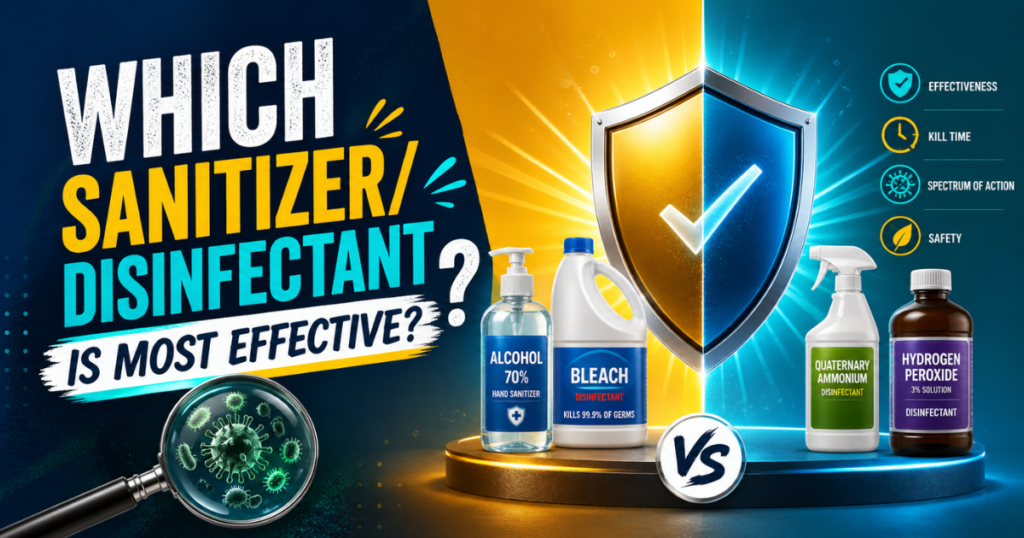
The truth is, there is no single answer because it depends on how and where you are using it. For cleaning hands, alcohol-based sanitizers are usually the most effective since they quickly kill most germs without the need for water. On the other hand, for cleaning surfaces at home like tables, door handles, and kitchen areas, stronger disinfectants such as bleach-based solutions are more suitable.
Understanding the difference helps you use each product in the right way and get better protection. In this guide, we will break everything down in a very simple and easy-to-understand way so you can choose the right sanitizer or disinfectant safely and effectively for your daily needs.
What Is a Sanitizer and What Is a Disinfectant?
Sanitizer
A sanitizer is a product mainly used on your hands to quickly reduce germs. It is specially made for skin use and works effectively even without water, making it very convenient when you are outside or don’t have access to soap and water.
Disinfectant
A disinfectant is used to clean and kill germs on hard surfaces like tables, floors, door handles, and bathroom areas. It works more strongly to remove germs from objects and surroundings, but it is not safe to use on your skin.
Simple Difference
- Sanitizer → For hands and skin
- Disinfectant → For surfaces and objects
In simple words, sanitizers help keep your hands clean, while disinfectants help keep your surroundings germ-free.
Most Effective Sanitizer for Hands
The most effective sanitizers are those that are alcohol-based, as they are proven to kill a wide range of germs quickly and efficiently.
Key Ingredients:
- Ethanol (60% to 80%)
- Isopropyl alcohol (around 70%)
Why alcohol-based sanitizers are considered the best:
- They kill most bacteria and viruses within seconds
- They start working almost immediately after the application
- No water is needed, making them very convenient to use anywhere
- Safe for regular use when used properly
It’s important to note that sanitizers containing less than 60% alcohol are usually not as effective in removing germs, so choosing the right alcohol concentration matters for better protection.
Most Effective Disinfectants for Home Use
For cleaning and disinfecting surfaces, stronger chemical solutions are needed because they are designed to kill germs more deeply and effectively.
Common effective disinfectants include:
- Sodium hypochlorite (bleach-based solutions)
- Hydrogen peroxide solutions
- Quaternary ammonium compounds
Where you can use them:
- Kitchen counters and cooking areas
- Bathroom surfaces like sinks and tiles
- Frequently touched items like door handles and light switches
- Floors, tiles, and other hard surfaces
These disinfectants are specially made for deep cleaning non-living surfaces, helping to reduce germs and keep your surroundings more hygienic and safe.
Difference Between Sanitizer and Disinfectant
| Sanitizer | Disinfectant |
| Used on hands | Used on surfaces |
| Mild formula | Strong chemical formula |
| Skin safe | Not safe for skin |
| Quick germ reduction | Deep germ killing |
Which One Is More Effective?
The effectiveness of sanitizers and disinfectants depends on how and where you use them.
- For hands: Alcohol-based sanitizers are the most effective because they quickly kill germs and are safe for skin use.
- For surfaces: Disinfectants like bleach-based solutions or hydrogen peroxide work best as they provide deeper cleaning and kill germs on objects and areas.
In simple terms, both are equally important; they just serve different purposes and work best in their own specific situations.
Common Mistakes People Make
Many people don’t get the full benefit of sanitizers and disinfectants simply because they don’t use them the right way, which reduces their effectiveness.
Some common mistakes include:
- Using too little sanitizer, which may not cover all areas of the hands
- Wiping or drying hands immediately after applying sanitizer, instead of letting it dry naturally
- Using products with low alcohol content, which may not kill enough germs
- Not removing visible dirt before using sanitizer, which can block proper cleaning
In simple words, how you use the product is just as important as the product itself. Proper application ensures better protection and helps you get the best results.
How to Choose a Good Sanitizer
A good sanitizer should always meet a few important standards to make sure it is both safe and effective.
It should have:
- At least 60% alcohol content, so it can properly kill germs
- A fast-drying formula, so it works quickly and is easy to use
- Skin-safe ingredients, to prevent irritation with regular use
- Proper regulatory approval, ensuring it meets safety standards
It’s also important to be careful and avoid sanitizers that do not clearly mention their ingredients or alcohol percentage on the label, as they may not be reliable or effective.
Basic Home Safety Tips
To effectively reduce germs at home and maintain a clean environment, it’s important to follow a few simple daily habits.
- Clean frequently touched surfaces every day, such as door handles, switches, tables, and mobile phones
- Use proper disinfectants on hard surfaces like kitchen counters, bathrooms, and floors
- Wash your hands regularly with soap or use a sanitizer, especially before eating and after coming from outside
- Keep your rooms well ventilated by allowing fresh air to circulate
By following these simple steps consistently, you can significantly reduce germs at home and create a healthier and safer living space.
Conclusion
The most effective sanitizers are alcohol-based products that contain around 60% to 80% alcohol, as this range is strong enough to quickly kill most germs on the skin. For cleaning and disinfecting surfaces at home, stronger solutions like bleach-based disinfectants or hydrogen peroxide work best because they are designed for deep cleaning and killing germs on non-living surfaces.
In simple terms, sanitizers are mainly meant for your hands, while disinfectants are meant for cleaning surfaces like tables, floors, and bathrooms. When both are used properly in the right situations, they help maintain better hygiene and provide stronger protection against germs in everyday life.
FAQs
The most effective sanitizers are alcohol-based products that contain around 60% to 80% alcohol. This level of alcohol is strong enough to quickly destroy many types of bacteria and viruses when used correctly. They work within seconds and are widely recommended for everyday hand hygiene.
No, disinfectants should never be used on your skin. They are made for cleaning surfaces like floors, tables, and bathroom areas. These products contain stronger chemicals that can irritate or damage the skin, so they are not safe for hand use under any circumstances.
Yes, in many situations, soap and water are actually more effective than sanitizer. When your hands are visibly dirty, oily, or greasy, washing with soap helps remove dirt and germs completely from the skin. Sanitizer works best when soap and water are not available.
The safest choice for regular use is a well-approved alcohol-based sanitizer that meets safety standards and clearly mentions its ingredients and alcohol percentage. A good sanitizer should be gentle on the skin while still being strong enough to kill germs effectively.