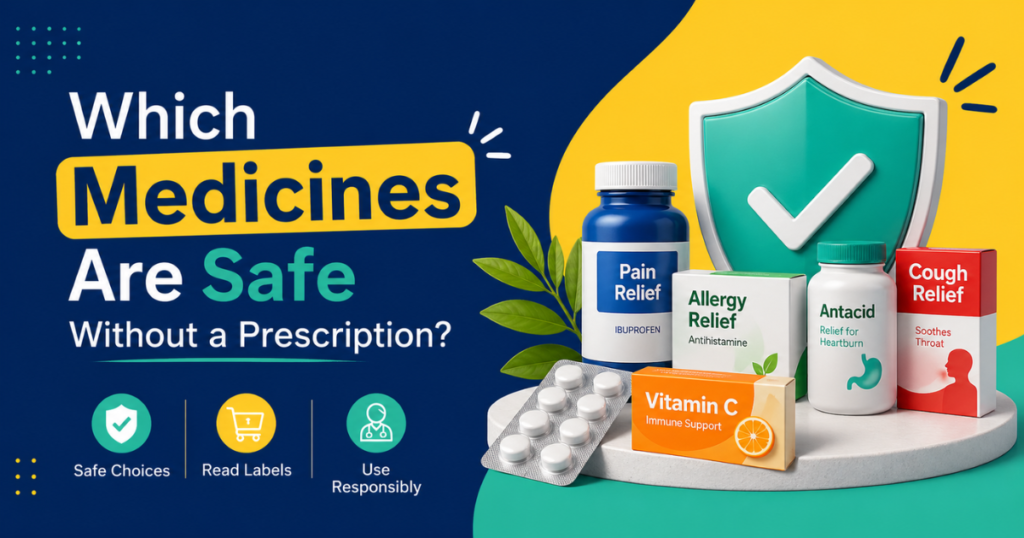
Introduction
Ever had a headache, fever, or cold and found yourself thinking, “Which medicines are actually safe to take without a prescription?”
If yes, you’re definitely not alone. This is something most people wonder about when they’re not feeling well and just want quick relief.
Every day, millions of people use over-the-counter (OTC) medicines to treat common problems like headaches, colds, fever, body pain, and allergies. These medicines are easily available in pharmacies and don’t always require a doctor’s prescription, which makes them very convenient to use.
But here’s something important to understand: just because a medicine is available without a prescription doesn’t always mean it is completely risk-free. Some medicines are safe when used correctly, but others can cause side effects or problems if they are taken the wrong way or in the wrong amount.
That’s why it’s really important to know what you can safely take on your own and what should only be used after a doctor’s advice. Understanding this can help you take better care of your health and avoid unnecessary risks while still getting the relief you need.
What Are Non-Prescription Medicines?
Non-prescription medicines, also known as OTC (Over-the-Counter) medicines, are drugs that you can easily buy from a pharmacy without needing a doctor’s prescription. They are made for common, mild health problems and are generally safe when used properly.
These medicines are usually used for everyday issues like:
- Headache
- Fever
- Cold and cough
- Acidity or indigestion
- Minor skin problems
Because they are easily available, many people use them for quick relief at home.
Prescription vs OTC Medicines
OTC Medicines:
- No doctor’s prescription needed
- Used for mild health problems
- Usually lower strength
- Easily available in pharmacies
Prescription Medicines:
- A doctor’s prescription is required
- Used for more serious or specific conditions
- Usually stronger in effect
- Their use is controlled for safety
OTC medicines can be very helpful, but it’s important to remember that they should only be used correctly and mainly for short-term relief. Using them the right way helps ensure they stay safe and effective for your health.
Safe Medicines You Can Take Without a Prescription
Here are the most common and generally safe OTC (Over-the-Counter) medicines you can find easily in pharmacies. These are used for everyday health issues and can give quick relief when used correctly.
1. Pain Relief & Fever Medicines
These are the most commonly used OTC medicines for basic pain and fever:
- Paracetamol (Acetaminophen) – helps reduce fever and mild pain
- Ibuprofen – helps with pain, swelling, and inflammation (should be used carefully)
Best for: headache, fever, muscle pain, and body aches
2. Cold & Allergy Medicines
These medicines help manage cold symptoms and allergies:
- Antihistamines – help reduce sneezing, a runny nose, and allergies
- Basic cough syrups – help relieve dry or wet cough
- Decongestant sprays – help clear a blocked nose (for short-term use only)
Best for: cold, flu, seasonal allergies
3. Digestive Health Medicines
These are used for common stomach-related problems:
- Antacids – help with acidity and heartburn
- ORS (Oral Rehydration Solution) – helps prevent dehydration
- Mild laxatives – help relieve constipation
Best for: acidity, stomach upset, dehydration, constipation
4. Skin Care OTC Medicines
These are helpful for minor skin issues:
- Antiseptic creams – help clean and protect small wounds
- Anti-fungal creams – treat mild fungal infections
- Calamine lotion – soothes itching and skin rashes
Best for: minor cuts, skin irritation, rashes, infections
5. Vitamins & Supplements
These support overall health and nutrition:
- Vitamin C – supports immunity
- Vitamin D – helps bone health and immunity
- Multivitamins – help cover daily nutritional needs
Best for: general immunity support and vitamin deficiencies
OTC medicines can be very helpful for everyday health problems, but they should always be used in the right way and only for short-term relief.
Important Safety Note
Even though these medicines are available without a prescription, misuse can still cause:
- Liver or kidney damage (overuse of painkillers)
- Drug interactions
- Allergic reactions
- Masking serious diseases
How to Use OTC Medicines Safely
If you’re planning to use medicines without a prescription, it’s very important to use them safely. Following a few simple rules can help you avoid side effects and get better results.
Always read the label
Before taking any medicine, carefully check the instructions, dosage, possible side effects, and warnings. This helps you understand how to use it correctly.
Do not overdose
Taking more medicine will not make you recover faster. In fact, it can be harmful and may cause serious side effects.
Avoid mixing medicines
Do not combine different medicines without proper knowledge, as some combinations can react badly and become unsafe.
Use only for short-term relief
OTC medicines are meant for temporary use. If your symptoms continue for more than 2–3 days, it’s better to consult a doctor.
Check the expiry date
Always make sure the medicine is not expired. Using expired medicine can be ineffective or even unsafe for your health.
When You Should NOT Self-Medicate
You should avoid using OTC medicines and consult a doctor if you experience any of the following situations:
- High fever lasting more than 3 days
- Severe or unusual pain that doesn’t go away
- Difficulty in breathing or shortness of breath
- Existing chronic health conditions like diabetes, high blood pressure, or asthma
- Pregnancy-related symptoms or discomfort
- Any symptoms that you don’t clearly understand or that feel unusual
In these cases, it’s always safer to get medical advice instead of self-medicating, so you can get the right diagnosis and proper treatment.
OTC Medicine Safety vs Risk
OTC medicines can be safe and helpful when used the right way, but they can become risky in certain situations, such as:
- When they are taken without reading the instructions properly
- When they are used for long-term health problems instead of short-term relief
- When they are mixed with other medicines without guidance
- When dosage levels are higher than advised
Simple rule to remember: “Safe does not mean unlimited.”
Conclusion
OTC medicines are very useful for getting quick relief from common problems like fever, headache, cold, and acidity. But they should always be used carefully and responsibly.
A simple way to stay safe is:
- Use OTC medicines only for minor health issues
- Avoid self-medication for serious or long-lasting symptoms
- Always ask a doctor if you are unsure
Because when it comes to health, safe use is always smart use.
FAQs
OTC medicines are generally safe when you use them correctly. However, if they are misused or taken in the wrong way, they can still cause side effects.
No, it is not recommended. Taking painkillers for a long time can harm your liver, kidneys, and even affect your stomach.
Paracetamol is often considered one of the safest OTC medicines when taken in the correct dosage.
Yes, but only in child-specific doses. It’s always best to follow a doctor’s or pharmacist’s advice before giving any medicine to children.