Introduction
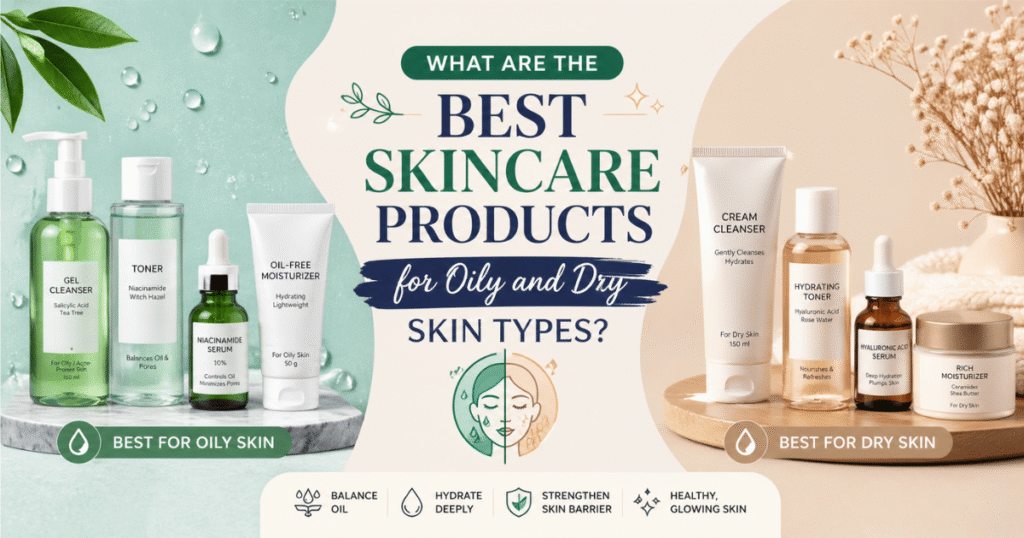
With so many skincare options available, choosing the right one can be confusing. Oily and dry skin require different care, so products don’t work the same for everyone.
If you use the wrong products, your skin can easily become unbalanced. For example, heavy creams may make oily skin feel even more greasy, while harsh cleansers can make dry skin feel tight, flaky, or irritated. That’s why understanding your skin type is the first and most important step in building a good skincare routine.
In this guide, we’ll make things simple for you. You’ll learn:
- The best skincare products specially suited for oily skin
- The most effective products for dry skin care
- Key ingredients that actually help your skin stay healthy
- An easy daily skincare routine you can follow without confusion
This guide will help you confidently choose products and create a routine for healthy, glowing skin every day.
Understanding Your Skin Type
Understanding your skin type comes first when choosing a skincare routine. Let’s make it simple:
Oily Skin
Oily skin produces extra sebum (natural oil), which can sometimes make the skin feel greasy or heavy.
This can lead to:
- Shiny or oily-looking face
- Clogged pores
- Acne and frequent breakouts
Goal: The purpose of oily skin is to manage oiliness while maintaining healthy, non-irritated skin.
Dry Skin
Dry skin does not produce enough natural oils, which means it struggles to stay properly hydrated.
This can lead to:
- Flaky or rough skin texture
- Tight or uncomfortable feeling
- Dull or tired-looking appearance
For dry skin, the key is boosting hydration and repairing the moisture barrier.
Oily skin requires balance, while dry skin needs hydration, and the right routine depends on understanding this difference.
Best Skincare Products for Oily Skin
For oily skin, the focus is on controlling oil, reducing breakouts, and keeping the skin balanced without over-drying. Here is the easy schedule you can try:
1. Cleanser (Oil Control Step)
Use a gentle cleanser first to get rid of excess oil and impurities.
Look for:
- Salicylic acid cleansers
- Foaming gel cleansers
- Non-comedogenic formulas (won’t clog pores)
Works to control oil production and reduce acne buildup.
2. Toner (Optional but Helpful)
Toner helps keep the skin fresh while managing excess oil throughout the day.
Best ingredients:
- Niacinamide
- Salicylic acid
Works to control oil production and refine pore appearance.
3. Serum (Treatment Step)
Serums are designed to address concerns like acne, excess oil, and uneven skin texture.
Best ingredients:
- Niacinamide (oil balance)
- Zinc (helps with acne control)
- Retinol (improves skin texture and reduces breakouts)
Helps keep skin clear and balanced over time
4. Moisturizer (Lightweight Only)
Hydration is very important for oily skin, just in a lighter texture.
Best options:
- Gel-based moisturizers
- Oil-free formulas
- Water-based moisturizers
Keeps skin hydrated without making it greasy
5. Sunscreen (Must-Have Step)
Even with oily skin, sunscreen should never be skipped.
Look for:
- Matte finish sunscreen
- Oil-free SPF 30+ formulas
Protects the skin from sun damage and helps reduce acne marks.
For oily skin, the routine should prioritize cleansing, lightweight hydration, and oil control, not heavy, pore-clogging products.
Best Skincare Products for Dry Skin
If you have dry skin, your main goal is to restore moisture, repair the skin barrier, and prevent flakiness. Dry skin needs gentle care and extra hydration at every step.
1. Cleanser (Gentle Hydration Step)
Start with a mild cleanser that cleans your skin without removing natural oils.
Look for:
- Cream cleansers
- Hydrating cleansers
- Fragrance-free formulas
Gently cleanses without making the skin feel dry or tight.
2. Toner (Hydrating Boost)
A hydrating toner helps instantly refresh and soften dry skin.
Best ingredients:
- Hyaluronic acid
- Glycerin
- Rose water
Quickly restores moisture and preps skin for better absorption.
3. Serum (Deep Moisture Care)
Serums help deliver hydration deep into the skin layers.
Best ingredients:
- Hyaluronic acid (deep hydration)
- Ceramides (barrier repair)
- Vitamin E (skin nourishment)
Helps plump the skin and reduce dryness from within
4. Moisturizer (Rich & Nourishing Step)
This is the foundation step for dry skin care.
Best types:
- Cream-based moisturizers
- Barrier repair creams
- Oil-infused moisturizers
Keeps moisture locked in and supports the healing of dry, rough skin.
5. Sunscreen (Hydrating Protection)
Even dry skin needs sun protection every day.
Look for:
- Moisturizing sunscreen
- Cream-based SPF formulas
Protects skin from sun damage without drying it out
A dry skin routine should focus on deep hydration, barrier repair, and gentle care at every step to keep skin soft, smooth, and healthy.
Oily vs Dry Skin: Product Difference
Here’s a clear side-by-side comparison to help you choose the right skincare products based on your skin type:
| Step | Oily Skin | Dry Skin |
| Cleanser | Foaming/gel cleansers | Cream/hydrating cleansers |
| Toner | Oil-control toners | Hydrating toners |
| Serum | Niacinamide, retinol | Hyaluronic acid, ceramides |
| Moisturizer | Gel-based, oil-free | Rich, creamy moisturizers |
| Sunscreen | Matte finish SPF | Hydrating SPF |
- Oily skin: Focus on oil control + lightweight products
- Dry skin: Focus on deep hydration + rich nourishment
Choosing the right product type for your skin can make a big difference in keeping it healthy, balanced, and glowing every day.
Best Ingredients to Look For
Choosing the right skincare isn’t just about the product; it’s also about the ingredients inside it. Here are the most effective ones based on your skin type:
For Oily Skin
If your skin gets greasy easily or is prone to acne, look for ingredients that help control oil and reduce breakouts:
- Niacinamide → Balances oil and improves skin texture
- Salicylic Acid → Helps clear pores and prevent acne
- Zinc → Reduces excess oil and soothes inflammation
- Retinol → Improves skin texture and helps with acne control
For Dry Skin
If your skin feels tight, flaky, or rough, focus on ingredients that deeply hydrate and repair:
- Hyaluronic Acid → Deep hydration and plumping effect
- Ceramides → Strengthens and repairs skin barrier
- Glycerin → Attracts moisture to the skin
- Vitamin E → Nourishes and protects dry skin
Oily skin needs oil control and pore care, while dry skin needs deep hydration and barrier repair, and the right ingredients make all the difference.
Common Mistakes to Avoid
- Using harsh cleansers on dry skin can make dryness worse)
- Skipping moisturizer if you have oily skin
- Using heavy, greasy creams on oily skin
- Over-exfoliating both skin types can damage the skin barrier)
- Ignoring sunscreen in your daily routine
Expert Tips for Better Skin
- Always choose products based on your skin type
- Avoid overusing strong active ingredients
- Keep your routine simple (cleanser + moisturizer + sunscreen is enough)
- Drink enough water every day for natural hydration
- Always patch test new products before applying them fully
Conclusion
The best skincare routine is always guided by your skin type.
Oily skin needs oil control and lightweight hydration.
Dry skin always needs deep hydration and barrier repair
When you use the right ingredients and avoid common mistakes, your skin becomes healthier, clearer, and more balanced over time with much less effort.
FAQs
If your face feels greasy, shiny, and prone to acne, you likely have oily skin. If your skin feels tight, flaky, or rough, you likely have dry skin. You can also check after washing your face oily skin becomes shiny quickly, while dry skin feels tight.
No, oily and dry skin require different products. Oily skin needs lightweight, oil-free products, while dry skin needs rich, hydrating formulas to restore moisture and prevent dryness.
A simple routine includes:
Cleanser (based on skin type)
Moisturizer (light for oily, rich for dry)
Sunscreen (SPF 30 or higher)
This basic routine helps maintain healthy and balanced skin.
Yes, moisturizer is essential even for oily skin. Skipping it can make your skin produce more oil. Use a lightweight, oil-free, or gel-based moisturizer for best results.
For oily skin, avoid heavy oils and greasy creams.
For dry skin, avoid alcohol-based or harsh cleansers that can strip natural moisture.
Choosing the right ingredients helps prevent skin problems and keeps your skin healthy.