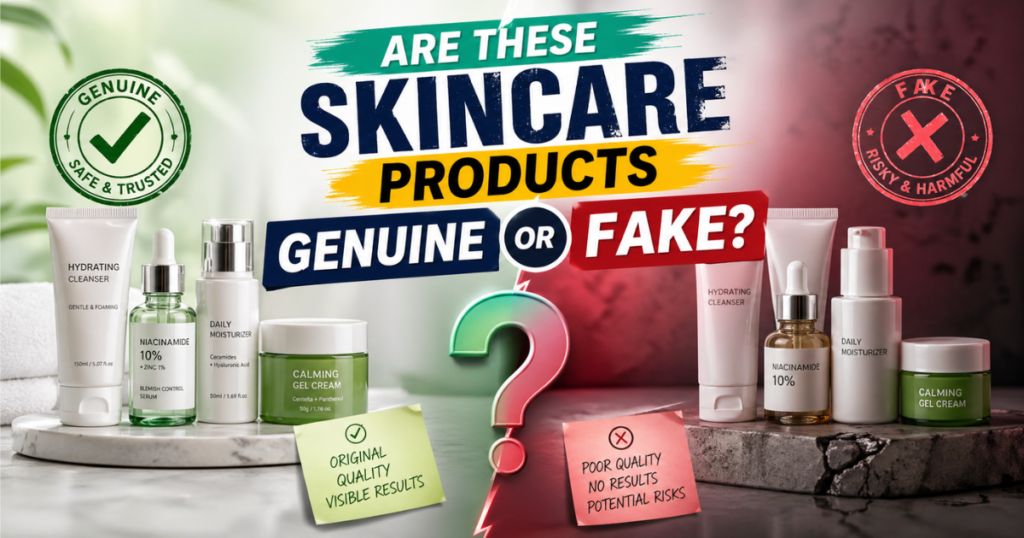
Are These Skincare Products Genuine or Fake?
You finally find your favorite serum at a huge discount, like 60% off, and it feels like a win. But here’s the uncomfortable truth: sometimes that “amazing deal” isn’t a deal at all.
Counterfeit skincare has become a serious problem. It’s a multi-billion-dollar market, and fake products don’t just fail to work; they can actually harm your skin. From breakouts and irritation to allergic reactions and long-term damage, the risks are real.
What makes it even trickier is that fake skincare today looks incredibly real. Packaging, logos, and even textures can be copied so well that even regular beauty shoppers (and sometimes experts) can get fooled.
But don’t worry, once you know what signs to look for, it becomes much easier to tell the difference between real and fake products.
In this guide, we’ll break it down in a simple way so you can protect both your skin health and your money, and shop with more confidence every time.
Why Counterfeit Skincare Is a Bigger Problem Than You Think
Fake skincare isn’t just a small scam; it’s a global illegal industry worth around $5.4 billion every year. Counterfeit versions of popular and luxury beauty brands are widely sold across online marketplaces, discount websites, and sometimes even unknowingly through third-party sellers.
The biggest issue? These products often look almost identical to the real ones, which makes them very easy to trust at first glance.
What’s Actually Inside Fake Skincare?
Lab testing of counterfeit cosmetics has revealed some shocking and dangerous ingredients, including:
- Heavy metals like arsenic and lead → can build up in the skin over time
- Mercury → linked to kidney damage and nervous system issues
- Bacterial contamination → including harmful bacteria like E. coli and Staphylococcus
- Industrial chemicals → not approved for use in cosmetics
- Cheap fillers → in some cases, even unsafe materials are used to mimic texture
The biggest concern is that these products are made with no safety control, no regulation, and no hygiene standards.
Most Commonly Counterfeited Brands
Fake products often target well-known and high-demand skincare brands, including:
- Charlotte Tilbury
- La Mer
- SK-II
- The Ordinary
- CeraVe
- Sunday Riley
- Drunk Elephant
And in reality, almost every popular luxury skincare brand has been copied at some point.
If a deal looks too good to be true, especially for premium skincare, it probably is. Counterfeit products don’t just waste your money; they can seriously harm your skin health.
That’s why buying from trusted sources matters just as much as choosing the right product.
How to Spot Fake Skincare Products
Fake skincare can look very convincing, but there are clear warning signs if you know where to look. Here are the most important things to check before you buy or use any product:
1. A price that appears almost too good to believe.
This is the biggest red flag.
If a luxury product like a $150 moisturizer is selling for $20–$30, something is wrong. Genuine brands rarely offer extreme discounts (usually only 20–30% max during sales).
Ask yourself: Would an official retailer realistically sell it this cheap?
2. Packaging Looks “Almost Right.”
Fake products often look similar but are never perfect.
Watch for:
- Spelling mistakes (e.g., “Cerrave” instead of CeraVe)
- Slight font differences or uneven spacing
- Blurry or low-quality logos
- Cheap, flimsy packaging material
- Color tones slightly different from the original
- Misaligned labels or printing errors
Tip: Always compare with images from the official brand website before buying.
3. Texture, Color, or Smell Feels Off
Your skin often notices problems before your eyes do.
Be cautious if the product:
- Smells unusually strong or different
- Has a different texture (too watery, thick, or grainy)
- Looks discolored or separated
- Feels inconsistent with what you’ve used before
If something feels “off,” trust that instinct.
4. Missing or Invalid Batch Code
Every real skincare product has a batch code (letters/numbers printed on packaging).
You can verify it using sites like:
- CheckFresh.com
- CheckCosmetic.net
No code or invalid results = major warning sign
5. Ingredient List Looks Wrong or Missing
Legit skincare must list ingredients in proper INCI format.
Red flags include:
- No ingredient list at all
- Vague terms like “special blend.”
- Ingredients that don’t match the official brand formula
- Poor translation or incorrect labeling
6. Untrusted Seller or Website
Be extra careful where you buy from.
High-risk sources:
- Third-party marketplace sellers
- eBay, Facebook Marketplace
- Unknown Instagram/TikTok shops
- Discount sites with no brand authorization
Safer options:
- Official brand websites
- Sephora, Ulta, Nordstrom, Boots
- Authorized retailers listed by the brand
7. QR Code Doesn’t Work
Many brands now include QR codes for verification.
Warning signs:
- Doesn’t scan properly
- Leads to a strange or unrelated website
- The website doesn’t match the official brand domain
8. Your Skin Reacts Suddenly
If a product causes:
- Burning
- Redness
- Breakouts
- Irritation or peeling
Stop using it immediately.
Fake products often have no quality control, which makes them unpredictable and potentially harmful.
Fake skincare isn’t always easy to spot, but if you check the price, packaging, ingredients, seller, and batch code, you can avoid most risks and protect your skin safely.
How to Authenticate Specific Popular Brands
| Brand | Authentication Method |
| The Ordinary / DECIEM | Verify batch code on DECIEM’s official site |
| SK-II | Holographic seal + batch code verification |
| La Mer | Authorized retailer list on LaMer.com |
| CeraVe | “Sold by Amazon” or official pharmacy/drugstore only |
| Charlotte Tilbury | QR code on packaging + authorized retailers list |
| Drunk Elephant | Official site or Sephora/Ulta only |
| Sunday Riley | Batch code + authorized retailer check |
Where Fake Skincare Is Most Commonly Sold
Understanding where counterfeit skincare is most commonly sold can help you avoid risky purchases and shop more safely. Fake products don’t appear randomly; they usually circulate through specific channels where monitoring is weaker and third-party sellers dominate.
Where Fake Skincare Commonly Circulates
Online Marketplaces (Highest Risk)
Platforms like Amazon, eBay, and similar marketplaces are among the most common places for counterfeit skincare.
- Third-party sellers can list products easily
- Even “fulfilled by platform” items may originate from unverified sources
- Authentic and fake products can appear side-by-side
Key point: Always check who the seller is, not just the platform.
Discount Stores & Liquidators
These stores sometimes offer genuine overstock products, but they can also be a gray area.
- Deep discounts on luxury skincare should be treated carefully
- No clear sourcing or supply chain transparency in some cases
- Counterfeit items may be mixed with real stock
Rule of thumb: If the discount feels extreme, double-check authenticity.
Social Media Shops
Platforms like TikTok Shop, Instagram stores, and Facebook Marketplace have become major distribution points for beauty products.
- Influencer-style ads make products look trustworthy
- Limited regulation and seller verification
- Attractive pricing increases the risk of fake products
Be extra cautious with viral deals and unknown sellers.
Overseas Travel & Street Markets
In some regions, counterfeit luxury skincare is commonly found in:
- Street markets
- Small cosmetic stalls
- Airport or tourist-area shops
- Products may look identical to originals, but are often unregulated
- High-end brands are frequently copied
Tip: If authenticity can’t be verified, it’s safer to avoid the purchase.
Fake skincare is most often found in places where third-party selling, low pricing, and weak verification overlap. Knowing these risk zones helps you make smarter decisions and avoid products that could harm your skin or waste your money.
What to Do If You’ve Bought a Fake Product
If you think your product is fake, act quickly to protect your skin and money.
1. Stop Using It
Don’t apply it again; fake products may contain unsafe ingredients.
2. Take Photos
Save evidence:
- Product + packaging
- Receipt/order details
- Any skin reaction
3. Report It
- 🇺🇸 USA: FDA (fda.gov)
- 🇬🇧 UK: Trading Standards
- Amazon/others: “Report a violation” option
4. Contact the Brand
Share photos and details that can help verify authenticity.
5. Request a Refund
Use platform buyer protection or file a dispute.
6. See a Dermatologist (if needed)
If your skin reacts badly, get medical help and show the product.
Stop using it, document it, report it, and protect your skin first; everything else can follow.
How to Buy Skincare Safely: A Quick Checklist
Before you buy any skincare product, quickly run through this checklist:
- Am I buying from an authorized retailer?
- Does the price match the normal market value (not suspiciously low)?
- Does the packaging look the same as official brand images?
- Is there a batch code I can verify?
- Is the ingredient list complete and correctly formatted?
- Does the product smell, feel, and look exactly as expected?
- Have I checked reviews for fake product complaints from this seller?
If you can confidently tick all these boxes, your purchase is very likely safe and authentic.
The Bottom Line
Fake skincare isn’t just about losing money; it can also be a serious health risk. A product that looks like your trusted moisturizer or serum may actually contain unsafe ingredients that can damage your skin barrier, trigger irritation, or cause unexpected reactions.
The brands most often targeted by counterfeiters are usually the ones people trust the most: luxury skincare, popular “science-backed” formulas, and viral cult favorites. That’s exactly why extra caution is needed with these products.
The safest approach is simple: buy directly from the brand or an officially verified retailer. Anything outside that system, no matter how tempting the discount, comes with risk.
At the end of the day, skincare is something you use on your skin every single day. That’s why it deserves careful, informed choices. Your skin is your body’s largest organ, and it’s worth protecting properly.
FAQs
You can identify fake skincare by checking price, packaging quality, ingredient list, batch code, seller authenticity, and product texture or smell. Any mismatch with official brand details is a warning sign.
Fake skincare products can cause skin irritation, acne, allergic reactions, and long-term skin damage. Some may even contain harmful ingredients like heavy metals or bacteria due to no safety regulations.
Fake skincare is most commonly found on online marketplaces, unknown social media shops, discount websites, and unverified street or overseas markets.
You can verify authenticity by checking the batch code on official verification websites, scanning QR codes, comparing packaging with the brand’s official website, and buying only from authorized retailers.
Stop using the product immediately, take photos as proof, report it to the platform or brand, request a refund, and consult a dermatologist if your skin shows any reaction.