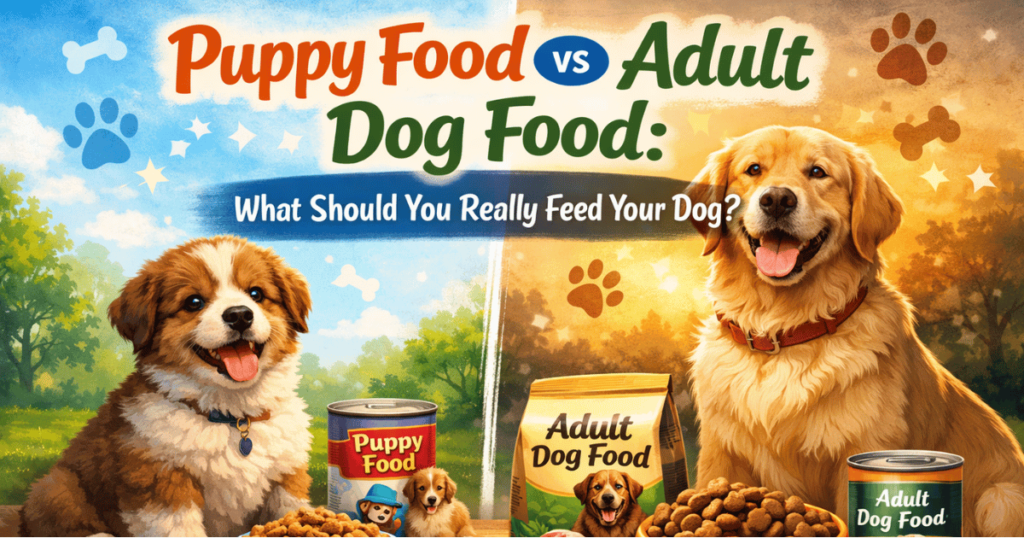
Introduction
Feeding your dog may look simple, but choosing the right food based on their age makes a big difference in their overall health. Every stage of a dog’s life has different nutritional needs, so giving the right type of food at the right time is very important.
Many pet owners think all dog food is the same, but that’s not true. Puppy food and adult dog food are specially made to support different stages of growth and development. Puppies need more nutrients for growth, while adult dogs need balanced nutrition to maintain their health and energy.
If you give the wrong type of food at the wrong time, it can affect your dog’s growth, digestion, energy levels, and even long-term health.
No need to stress, it’s easier than it looks. Let’s break it down simply and clearly so you can make the best choice for your dog.
What Sets Puppy Food Apart from Adult Dog Food?
The biggest difference between puppy food and adult dog food comes down to their purpose.
Puppy food is specially made to support growth, while adult dog food is designed to maintain your dog’s overall health. Puppies grow very fast. They are developing bones, muscles, and even brain function. Because of this, they need richer and more energy-packed nutrition. On the other hand, adult dogs don’t need extra growth support. They need stable, balanced nutrition to stay fit and avoid gaining excess weight.
Some key nutritional differences make each type of food suitable for its stage:
Puppy food usually contains higher levels of protein and fat to support rapid growth. It also has more calories to give puppies the energy they need throughout the day. In addition, it includes important nutrients that help with bone strength and brain development. The kibble size is often smaller, too, making it easier for young puppies to chew and eat comfortably.
Adult dog food, however, is more balanced and lighter. It is designed to maintain a healthy weight and provide steady energy without adding extra calories. This helps adult dogs stay active, healthy, and in good shape over time.
Best Food for Puppies (0–12 Months)
During the first year of life, your dog goes through rapid growth and development. This is the most important stage, and the right nutrition plays a big role in building a strong and healthy foundation.
Puppy food is specially designed to meet these needs. It helps in building strong bones and teeth, supports healthy muscle development, and strengthens the immune system. Puppies are also very active and playful, so they need enough energy throughout the day, which puppy food provides.
When choosing food for your puppy, there are a few important things to look for. Go for high-quality protein sources to support growth, along with healthy fats that provide energy. Essential vitamins and minerals are also important for overall development, especially for bones and brain health. Make sure the food is easy to digest so your puppy can absorb all the nutrients properly.
Puppies burn a lot of energy every day, so their food should be rich in nutrients and filling enough to keep them active, healthy, and satisfied.
Best Food for Adult Dogs (1+ Years)
Once your dog becomes an adult, their nutritional needs start to change. At this stage, the focus is no longer on growth but on maintaining overall health and keeping their body in good condition.
Adult dog food is designed to support a healthy weight, improve digestion, and keep your dog’s coat and skin in good shape. It provides balanced nutrition that helps your dog stay active without adding unnecessary calories.
When choosing adult dog food, look for moderate levels of protein to maintain muscle health without overloading the diet. Controlled calorie content is important to prevent weight gain. Fiber is also helpful for smooth digestion, while essential nutrients support joint health and overall well-being.
It’s important to remember that feeding high-calorie puppy food to an adult dog can lead to weight gain and health issues over time. Choosing the right food for their life stage helps keep your dog fit, healthy, and energetic.
When Should You Switch from Puppy to Adult Food?
The right time to switch from puppy food to adult dog food depends mainly on your dog’s breed and size, since different dogs grow at different speeds.
Small breeds usually mature faster and can switch around 10–12 months. Medium breeds typically transition at about 12 months. Large and giant breeds take longer to fully develop, so they may need puppy food for around 12–18 months.
Larger dogs stay in the growth stage for a longer period because their bones, joints, and muscles need more time to fully develop. That’s why they continue on nutrient-rich puppy food for a longer time compared to smaller breeds.
A simple rule to remember is: the bigger the dog, the longer they should stay on puppy food before moving to adult food.
Can You Feed Puppy Food to Adult Dogs (or Vice Versa)?
Feeding your dog the wrong type of food for their age can create health problems over time, even if the food itself is good quality.
If you continue feeding puppy food to adult dogs, it can lead to weight gain because puppy food usually contains higher calories than an adult dog needs. Over time, this extra energy can result in obesity and related health issues.
On the other hand, if you give adult dog food to puppies, it may not support their growth properly. Puppies need more nutrients, and adult food may lack the essential vitamins, minerals, and calories required for healthy development. This can lead to poor growth and lower energy levels.
That’s why it’s always best to choose food that is specially made for your dog’s life stage. Matching their diet with their age helps ensure proper growth, good health, and long-term well-being.
Common Feeding Mistakes to Avoid
Switching your dog’s food too early or making small feeding mistakes can have a big impact on their long-term health.
Some common mistakes include switching from puppy food to adult food before your dog is fully ready. Another mistake is choosing food based only on price, instead of focusing on proper nutrition and quality. Many pet owners also overfeed treats along with regular meals, which can lead to extra weight gain. Not adjusting food portions as your dog grows is another issue that can affect their overall health and energy levels.
Even small feeding errors like these can slowly lead to problems such as poor weight management, low energy, or nutritional imbalance over time.
The key is to follow a consistent, balanced feeding routine that matches your dog’s age, size, and needs.
Simple Comparison: Puppy vs Adult Dog Food
| Feature | Puppy Food | Adult Dog Food |
| Purpose | Growth & development | Maintenance |
| Calories | High | Moderate |
| Protein | High | Balanced |
| Fat | Higher | Controlled |
| Feeding Goal | Support growth | Maintain health |
Conclusion
Choosing between puppy food and adult dog food becomes much easier once you understand the basic difference between the two.
Puppies need food that is rich in nutrients and high in energy because their bodies are growing quickly. They require extra protein, calories, and essential nutrients to support the healthy development of bones, muscles, and overall growth.
Adult dogs, on the other hand, need more balanced nutrition. Their growth phase is complete, so their food should help maintain a healthy weight, support digestion, and keep them active and fit without adding extra calories.
When you feed the right food at the right stage of life, it helps your dog stay healthier, more energetic, and happier in the long run. Proper nutrition also plays an important role in ensuring a longer and better quality of life for your pet.
FAQs
Puppy food is designed for growth and development with higher calories and nutrients, while adult dog food is made for maintaining health, weight, and energy balance.
Puppies need special food because they are growing rapidly. Puppy food provides extra protein, fats, vitamins, and minerals for healthy bones, muscles, and brain development.
Yes, but it is not recommended. Puppy food is high in calories, which can lead to weight gain and obesity in adult dogs over time.
No, puppies should not eat adult dog food regularly because it may lack essential nutrients needed for growth, leading to poor development and low energy.
Small breeds: around 10–12 months
Medium breeds: around 12 months
Large/giant breeds: 12–18 months
The switch depends on your dog’s size and growth rate.