
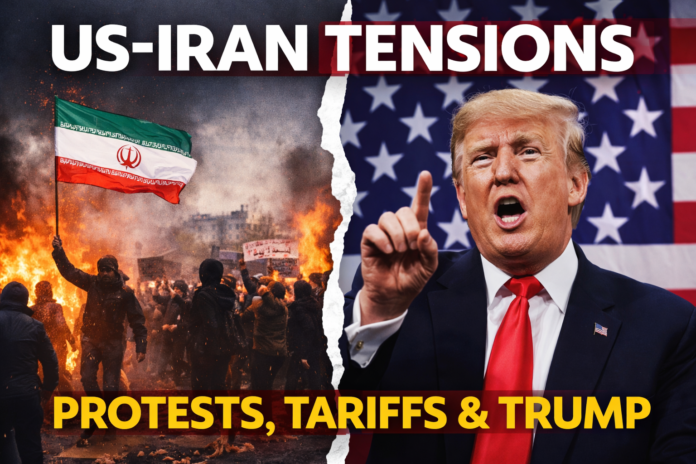
In a dramatic escalation of tensions involving the United States and Iran, former U.S. President Donald Trump has taken a multi-pronged approach — combining political pressure, economic sanctions, and vocal support for Iranian protesters — as the country experiences one of the most intense waves of unrest in decades.
The unrest in Iran began in late December 2025 amid an ongoing economic crisis marked by rampant inflation, soaring poverty levels, and public dissatisfaction with the government’s handling of basic needs. These demonstrations quickly spread nationwide and evolved from economic grievances into broader anti-government protests.
Trump’s Message to Iranian Protesters: “Help is On Its Way”
In a high-profile post on his social media platform Truth Social, Donald Trump directly addressed Iranian demonstrators, encouraging them to keep up their protests and even urging them to “take over your institutions.” He vowed that “HELP IS ON ITS WAY” but did not clarify what form that assistance might take. Trump also canceled all scheduled meetings with Iranian officials until the Iranian government stopped killing protesters.
The statement represents one of the strongest public engagements by a U.S. leader in support of internal dissent inside Iran in recent years, contributing to speculation over whether the United States might take further action
Trump’s Economic Pressure: 25% Tariff Warning
In parallel to his political rhetoric, Trump announced a sweeping economic measure that could reshape global trade patterns. In a direct post on Truth Social, he declared that any country doing business with Iran will face a 25% tariff on trade with the United States, effective immediately.
This tariff applies not just to Iranian products but to nations that maintain commercial ties with Tehran. Because Iran is integrated into regional supply chains, such a tariff could affect major trading partners such as China, Turkey, India, and others, forcing them to choose between economic engagement with Iran or deeper access to U.S. markets.
Protests and Human Cost in Iran
Meanwhile, Iran’s internal turmoil remains severe. According to rights groups, more than 3,000 people have died in nationwide demonstrations since late December, making this wave of unrest the deadliest in decades. The Iranian government imposed an extensive internet blackout that has severely limited outside access and communications.
Diplomacy and Regional Back-Channels
Despite heightened tensions, diplomatic efforts appear underway behind the scenes. Sources revealed that several Arab states, including Saudi Arabia, Qatar, Oman, and Egypt, lobbied the United States to avoid direct military action against Iran, urging Washington to give the situation space to resolve through non-military means.
What It Means Going Forward
Trump’s strategy combines public encouragement for protest movements, economic penalties for Tehran and its trading partners, and a continued show of pressure on Iran’s government. While the United States has not launched any military strikes, Trump’s stance signals a willingness to escalate diplomatic and economic pressure if Tehran fails to stem violence or address political demands.