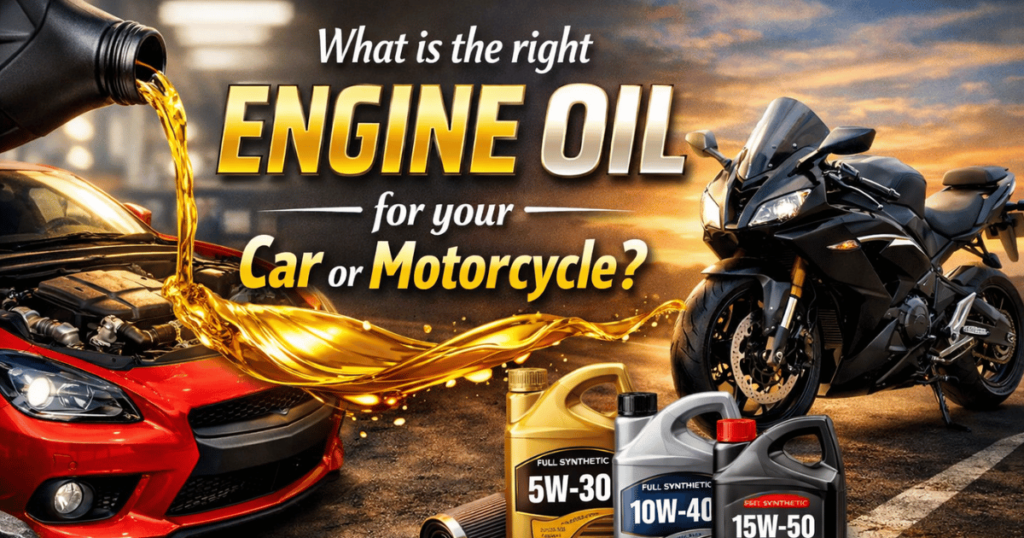
Introduction
Your vehicle’s engine is like its heart, and engine oil is what keeps it running smoothly. The right oil doesn’t just reduce friction, it also improves performance, protects engine parts, and helps your vehicle run efficiently for a longer time. For both cars and bikes, selecting the right engine oil plays a key role in long-term durability and smooth performance.
But the most common question every vehicle owner asks is:
Which type of engine oil should I use for my car or motorcycle?
The truth is, there isn’t a single perfect answer for everyone. The best engine oil depends on your vehicle type, engine condition, driving habits, and the manufacturer’s recommendation.
In this guide, we’ll break everything down in simple language so you can easily understand and choose the right engine oil for your vehicle.
What Does Engine Oil Do?
Engine oil plays a vital role in keeping your vehicle’s engine healthy and running smoothly. You can think of it as the lifeblood of the engine because it supports several important functions:
- Reduces friction: Helps engine parts move smoothly without rubbing against each other
- Prevents wear and tear: Protects engine components from damage and increases their lifespan
- Controls temperature: Keeps the engine cool by reducing heat buildup
- Cleans the engine: Removes dirt, sludge, and carbon deposits to maintain cleanliness
- Improves fuel efficiency: Helps the engine perform better and use fuel more efficiently
Without proper and regular engine oil, your engine can wear out quickly and may face serious damage over time.
Types of Engine Oil
Before choosing the best engine oil, it’s important to understand the three main types available. Each type is designed for different engines and driving needs.
1. Fully Synthetic Engine Oil
Fully synthetic oil is the most advanced and high-performance engine oil available.
Best for:
- Modern cars
- High-performance bikes
- Long-distance driving
Benefits:
- Provides maximum engine protection
- Improves fuel efficiency and mileage
- Performs well in both hot and cold temperatures
- Lasts longer, so oil change intervals are extended
Example grades: 5W-30, 5W-40
This type of oil is ideal if you want top performance, better engine life, and a smooth driving experience.
2. Semi-Synthetic Engine Oil
This oil combines the benefits of both mineral and synthetic oils, making it a practical choice for many everyday users.
Best for:
- Daily use of cars and bikes
- Normal to moderate driving conditions
Benefits:
- Offers balanced performance
- More affordable than fully synthetic oil
- Provides better protection than basic mineral oil
- Suitable for regular engine maintenance
It is a great middle option if you want good performance without spending too much.
3. Mineral Engine Oil
This is the most commonly used and cost-effective engine oil option.
Best for:
- Old vehicles
- Low-budget usage
- Simple or less advanced engines
Benefits:
- Very affordable
- Works well for basic engine requirements
- Easy to find and replace
It is a good choice if your vehicle is older or if you are looking for a cost-effective option for regular use.
Best Engine Oil for Cars
For your car, the first and most important step is always to check the owner’s manual, because every engine has specific requirements. Still, here are some general guidelines that can help you choose the right engine oil:
- Modern cars: Fully synthetic oil is usually recommended, such as 5W-30 or 5W-40, for better performance and protection
- Older cars: Semi-synthetic or mineral oil works well, depending on the engine condition
- City driving: 5W-30 is a good option because it improves fuel efficiency in stop-and-go traffic
- Highway driving: 5W-40 is often preferred for stronger engine protection at higher speeds and long drives
In most cases, fully synthetic oil is considered the best choice for today’s modern cars because it offers superior performance and longer engine life.
Best Engine Oil for Bikes
Motorcycle engines are different from car engines because, in most bikes, the same oil is used for the engine, gearbox, and clutch. That’s why choosing the right oil is very important for smooth performance and longer engine life.
- Daily commuter bikes: Semi-synthetic oils like 10W-30 or 10W-40 work well for regular city riding and balanced performance.
- Sports bikes: Fully synthetic oils such as 10W-40 or 10W-50 are best for high performance and better engine protection at higher speeds
- Older bikes: Mineral oil, like 20W-50, is suitable for older engines that need thicker oil
Always make sure to use 4T motorcycle engine oil, as it is specially designed for bikes and ensures proper lubrication of the engine, gearbox, and clutch.
How to Choose the Best Engine Oil?
Here are the most important factors you should consider before choosing engine oil:
1. Check Your Vehicle Manual
Always start by reading your vehicle’s manual. The manufacturer gives the exact oil type and grade best suited for your engine.
2. Understand Oil Grade (Viscosity)
Example: 5W-30, 10W-40
- The first number (before W) shows how the oil performs in cold starts
- The second number shows how well it protects the engine at high temperatures
3. Driving Conditions
- City traffic: Low viscosity oil works better for stop-and-go driving
- Highway driving: Higher viscosity oil provides better protection during long, fast drives
4. Engine Age
- New engines: Fully synthetic oil is usually the best choice
- Older engines: Semi-synthetic or mineral oil can be more suitable
5. Trusted Brand
Always choose reliable and well-known brands for better quality and engine safety, such as:
- Castrol
- Mobil 1
- Shell
- Motul
- Valvoline
Choosing the right engine oil based on these factors helps improve performance, fuel efficiency, and engine life.
Common Mistakes to Avoid
Here are some common mistakes you should avoid when it comes to engine oil:
- Using the wrong viscosity grade: This can affect engine performance and may even cause long-term damage.
- Mixing different oils: Combining different types or brands of oil can reduce effectiveness and harm engine protection.
- Ignoring oil change intervals: Not changing oil on time leads to dirt buildup and poor engine health.
- Choosing cheap, low-quality oil: Low-grade oil may save money initially, but it can reduce engine life.
- Not checking manufacturer guidelines: Always follow the recommended oil type mentioned in your vehicle manual.
Avoiding these mistakes will help keep your engine running smoothly, efficiently, and for a longer time.
When Should You Change Engine Oil?
- Cars: Generally every 5,000 – 10,000 km, depending on the type of engine oil used (mineral, semi-synthetic, or fully synthetic).
- Bikes: Usually every 3,000 – 6,000 km, depending on riding conditions and oil quality.
Regular oil changes are very important because they help keep your engine clean, reduce wear and tear, and ensure long-lasting performance and smooth driving.
Conclusion
So, which engine oil is best for your car or bike?
The truth is, the best engine oil is the one that perfectly fits your vehicle’s needs. You should always choose an oil that:
- Matches your vehicle’s owner manual recommendations
- Has the correct viscosity grade for your engine
- Suits your driving conditions (city, highway, or mixed use)
- Comes from a trusted and reliable brand
- Is specifically designed for your type of engine (car or bike)
When you pick the right engine oil, you can enjoy many benefits:
Better engine performance
Longer engine life
Improved fuel efficiency
Smoother and more comfortable driving experience
FAQs
No, it’s not recommended. Bikes require special 4T engine oil because it is designed to work with the engine, clutch, and gearbox together. Using car oil in a bike can affect performance and smooth gear shifting.
Yes, in most cases, synthetic oil is better. It offers improved engine protection, better performance in extreme temperatures, and lasts longer compared to regular mineral oil.
Using the wrong engine oil can lead to poor engine performance, increased friction, reduced fuel efficiency, and even long-term engine damage.